



Photo: Centro Ecológico Akumal
The most severe heat stress on record
Between 2023 and 2025, the Mesoamerican Reef System (MAR) experienced the Fourth Global Coral Bleaching Event, the most extensive and severe heat stress episode ever recorded in the region. It was the worst bleaching event in its documented history, and monitoring teams from all four countries continue to measure its aftermath.
The MAR in Numbers
The 2024 MAR Report Card, prepared by Healthy Reefs for Healthy People, documented that:
- The heat stress began in June 2023, lasted four more months, and exceeded double the previous regional record (7.0 °C-weeks, in 2017; Muñiz-Castillo et al., 2024).
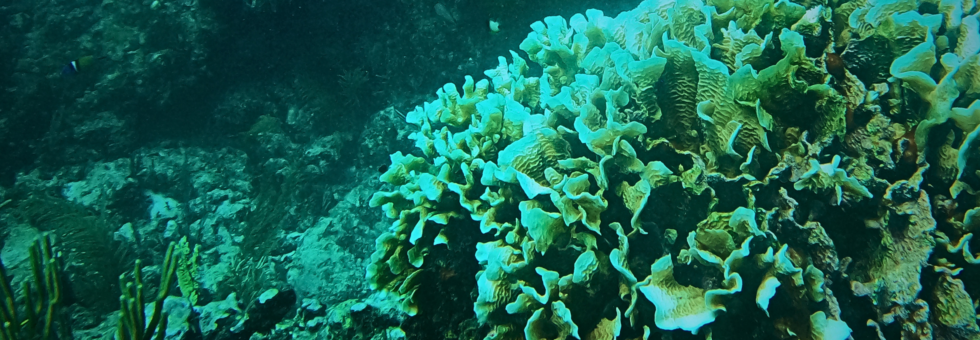
- Approximately 40% of corals were affected, with severe mortality at several sites. In the Northern Complex of the Belize Barrier, Glover's Reef, and Guatemala, more than 60% of corals were severely impacted. The Lettuce coral (Agaricia tenuifolia) was the hardest hit: 43% of its colonies were completely bleached and 23% partially bleached.
- The progress of the event is documented in real-time in the Bay Islands, Honduras, through in situ sensors and satellite records (Green et al., 2026).
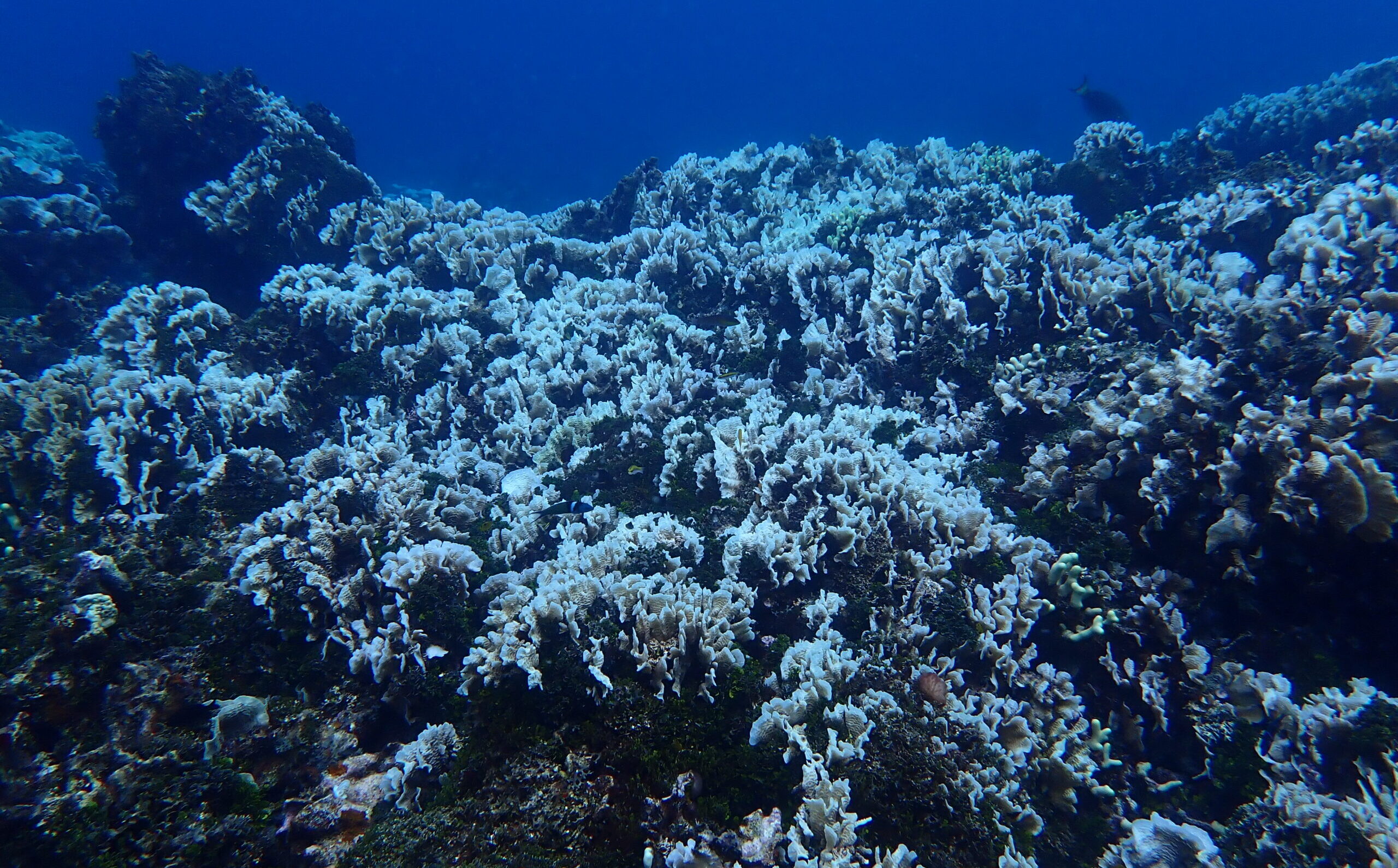 Photo: Claudia Guerrero
Honduras: In Tela and Roatan, high coverage reefs have changed
A benthic monitoring of the seafloor (AGRRA) in Tela and Roatán shows what three years of elevated heat stress left behind, with peaks of 18 and 12 °C-weeks, coral cover dropped to 60% in Tela and 44% in Roatán, while fleshy macroalgae increased to 58% and 38%, respectively (Paden et al., 2026). Coral diversity and the Reef Functional Index also decreased, indicating the impact of bleaching, with severe losses of Agaricia tenuifolia, a previously dominant species. Even so, some sites retained more coverage and diversity, a local difference that regional averages do not capture.
According to the researchers, Banco Capiro, in Tela Bay, was considered a "bright spot" of the Caribbean: a turbid reef that maintained exceptional coral cover (45 ± 3%) despite repeated thermal stress events of 12 °C-weeks or more in 2017, 2019, 2020, and 2021. Its case shows that resisting before does not guarantee surviving after. A high coverage dominated by Agaricia tenuifolia, susceptible to bleaching, may conceal fragility, and the refuge offered by turbid reefs has limits (Carolan et al., 2026).
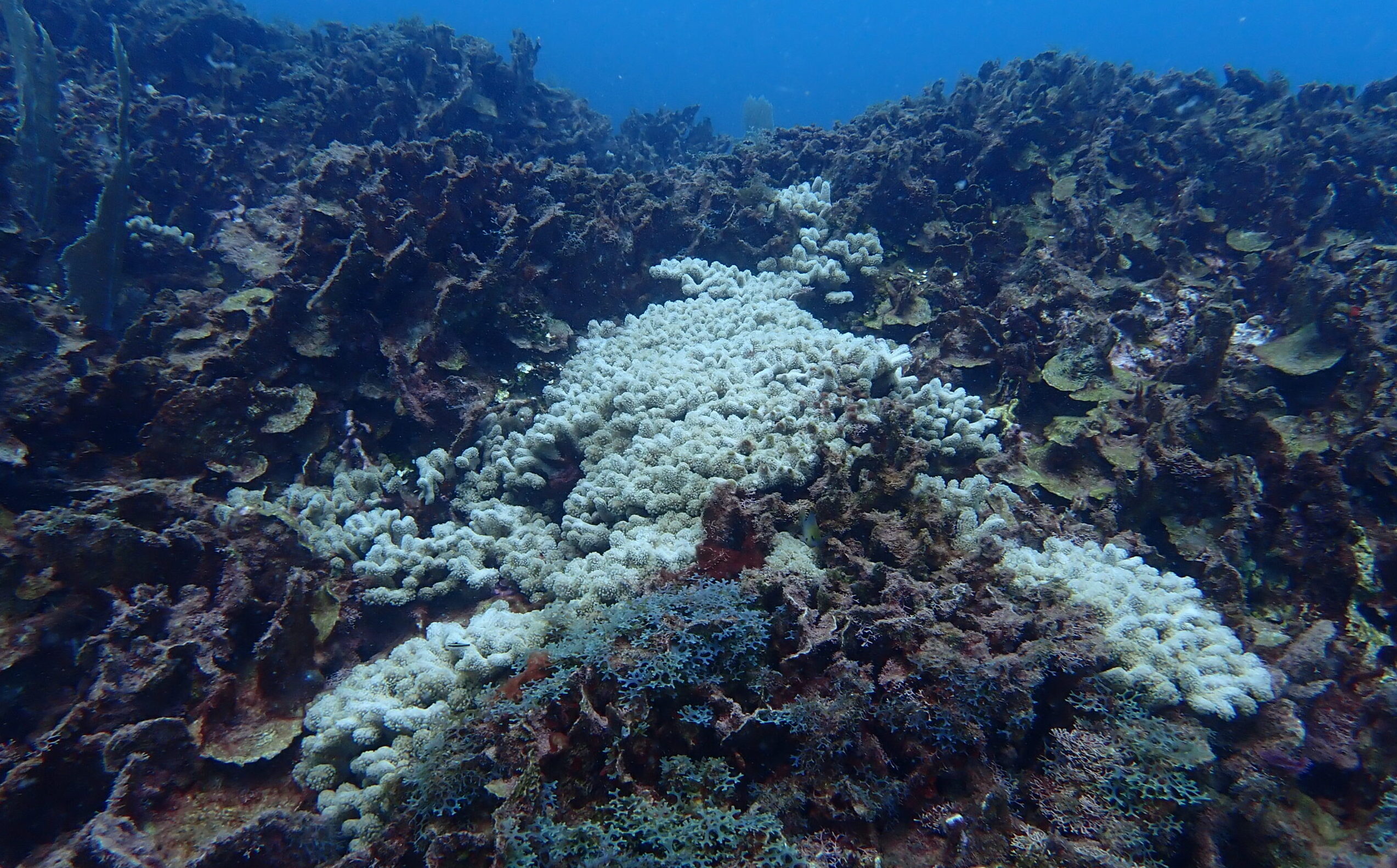 Photo: Claudia Guerrero
Impact on the Mexican Caribbean: from Growth to Erosion
In Puerto Morelos, Mexico, heat stress reached 14.29 °C-weeks and the maximum recorded temperature was 34.8 °C. By August 2023, 57% of elkhorn coral (Acropora palmata) had already died and the remaining 43% was bleached. By July 2024, mortality of this species reached 100% across the 170,000 m² of shallow reef analyzed with drones (Birkart and Álvarez-Filip, 2025).
Another profound consequence for the ecosystem is documented by Álvarez-Filip et al. (2026). The researchers evaluated carbonate budgets, that is, how much a reef builds or destroys, at 68 sites in the Caribbean and Gulf of Mexico, including SAM sites such as Puerto Morelos, Punta Allen, and Banco Chinchorro. More than 70% of Caribbean sites shifted to net erosional states following the 2023 heat, compounded by the effects of stony coral tissue loss disease (SCTLD). In contrast, Gulf of Mexico reefs maintained positive budgets thanks to their heat-tolerant massive corals. The combination of heat, bleaching, and disease is pushing reefs from net builders to eroding reefs, with implications for coastal protection.
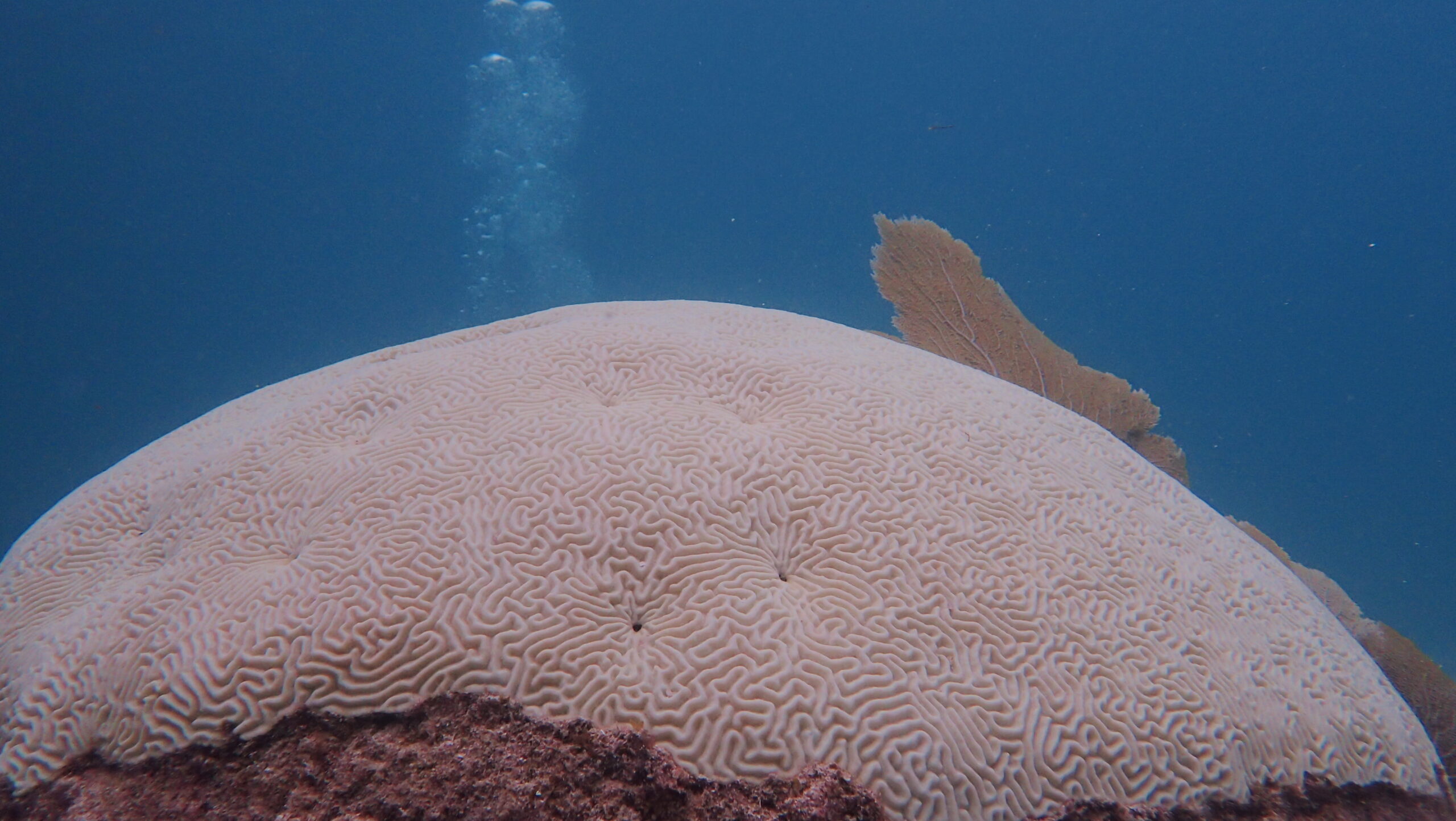 Photo: Raúl Tecalco
What it means and what can be done
Regional evidence points in the same direction: extreme heat, combined with local stressors, exceeds what any isolated measure can buffer, and reefs that withstood previous events are not immune to more intense exposures (Carolan et al., 2026). Even so, the 2024 MAR Report Card shows that local action continues to yield measurable results. Regional recommendations remain in effect:
- Promote climate actions that reduce greenhouse gas emissions to limit warming to 1.5 °C.
- Improve predictive models and early warning systems.
- Adopt restoration methods, including assisted evolution and microbiome research.
- Reduce other local pressures on the reef.
References
Álvarez-Filip, L., Perry, C. T., Pérez-Cervantes, E., Molina-Hernández, A., de Bakker, D. M., Webb, A. E., Rioja-Nieto, R., & Medina-Valmaseda, A. (2026). Disease and bleaching drive divergent net carbonate production across Caribbean reef systems. Current Biology, 36(10), 2688-2695.e2. https://doi.org/10.1016/j.cub.2026.04.017
Birkart, L. V., & Álvarez-Filip, L. (2025). 2023 global heatwave causes mass mortality of a keystone coral on shallow Western Atlantic reefs. iScience, 28(11), 113722. https://doi.org/10.1016/j.isci.2025.113722
Carolan, S., Baldock, K. C. R., East, H., Fitzsimmons, C., Johnson, J. A., Suggitt, A. J., & Guest, J. R. (2026). A Caribbean bright spot coral reef exceeds thermal limits during the fourth global coral bleaching event. Frontiers in Marine Science, 13. https://doi.org/10.3389/fmars.2026.1913019
Green, R. H., Randazzo-Eisemann, Á., Rivera-Sosa, A., Muñiz-Castillo, A. I., Rivera, A., Ortega, P., Núñez-Vallecillo, M., Guerrero, C., Guardiola, P., Brady, G., & Fox, H. E. (2026). Unprecedented heat stress and coral bleaching in 2023: A regional assessment from the Bay Islands of Honduras. Coral Reefs. https://doi.org/10.1007/s00338-025-02807-6
McField, M., Soto, M., Martinez, R., Giró, A., Guerrero, C., Rueda, M., Kramer, P., Roth, L., & Muñiz, I. (2024). 2024 Mesoamerican Reef Report Card. Healthy Reefs for Healthy People. https://www.healthyreefs.org
Muñiz-Castillo, A. I., Rivera-Sosa, A., McField, M., Chollett, I., Eakin, C. M., Enríquez, S., Giró, A., Drysdale, I., Rueda, M., Soto, M., Craig, N., & Arias-González, J. E. (2024). Underlying drivers of coral reef vulnerability to bleaching in the Mesoamerican Reef. Communications Biology, 7(1). https://doi.org/10.1038/s42003-024-07128-y
Paden, G., Muñiz-Castillo, A. I., Núñez-Vallecillo, M., Guerrero, C. A., Ortega, P., Brady, G., Green, R. H., Molina Mendoza, F. V., & Rivera, A. (2026). Spatial and temporal variability of Honduran benthic communities and reef functionality throughout the fourth global coral bleaching event. Frontiers in Marine Science, 13. https://doi.org/10.3389/fmars.2026.1923395
Author: © Israel Muñiz, Marine Science Officer – Healthy Reefs for Healthy People. MAR-RRN Communications
Photo Credits ©: Centro Ecológico Akumal (CEA), Claudia Guerrero – Healthy Reefs for Healthy People, Raúl Tecalco
Copyright © 2026