



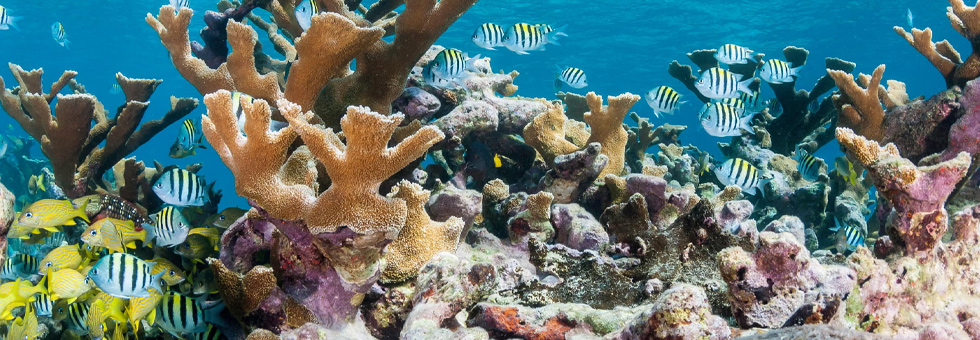
Photo: Wildestanimal/Alamy
Introduction
Caribbean reefs have lost nearly half of their hard coral cover since 1980, according to a new study by the Global Coral Reef Monitoring Network (GCRMN). The 48% decline has been driven primarily by climate change, specifically by marine heat waves that affect the microalgae that feed the coral.
During 2023-24, corals in the region experienced “the most destructive thermal stress ever recorded”, causing a 16.9% decline in coverage in just one year.
A transformed ecosystem by bleaching
Forty years ago, a diver would have observed a colorful and vibrant ecosystem that harbored hundreds of marine species such as spiny lobsters, queen conchs, parrotfish, turtles, and sharks. Coral reefs cover less than 1% of the global seafloor, but support at least 25% of marine species.
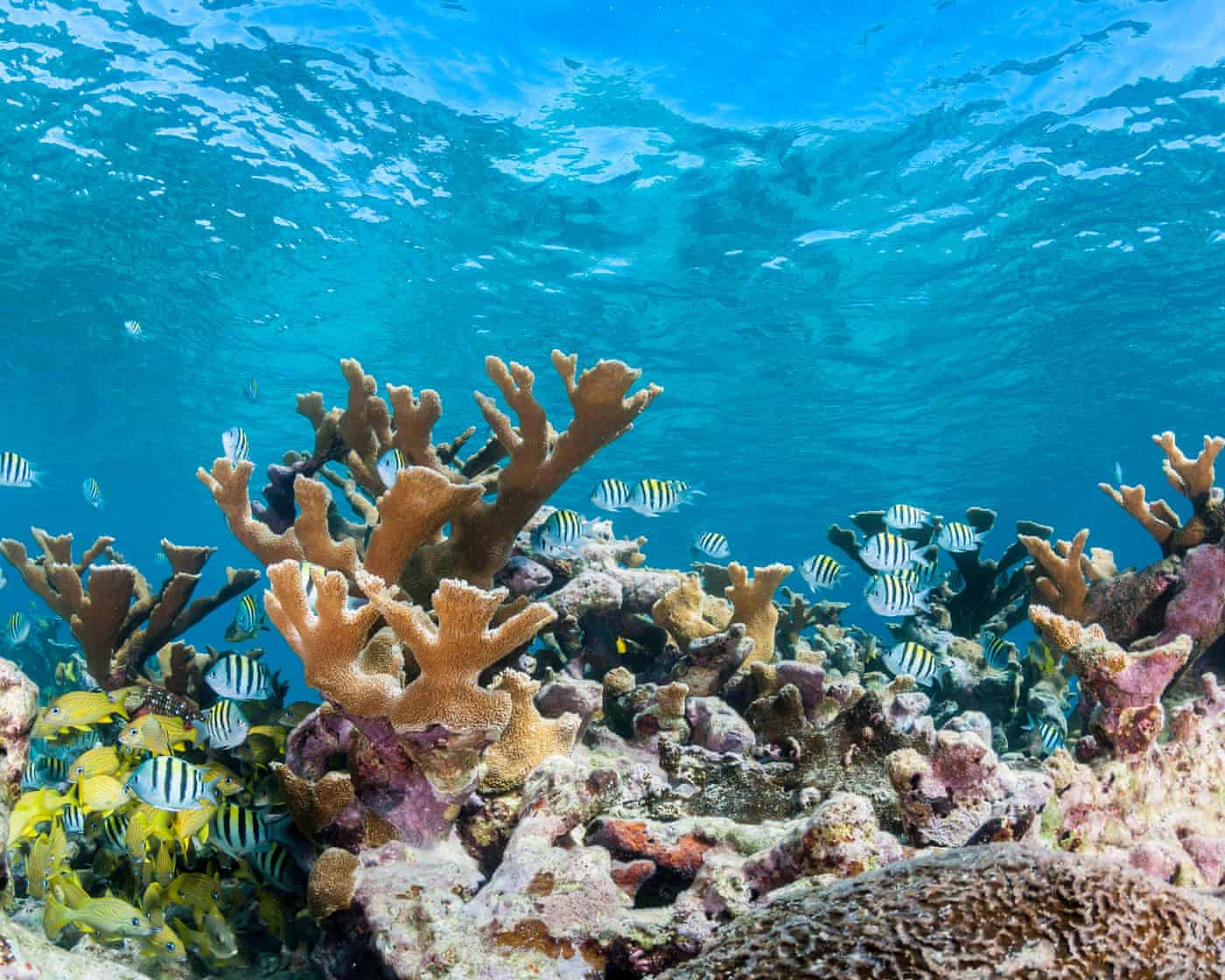
Hard corals in the Caribbean off Cuba in 2019. The region's coral experienced "the most destructive thermal stress ever recorded" in 2023-24, according to the report. (Wildestanimal/Alamy)
Dr. Jérémy Wicquart, one of the study's editors, described his experience diving last year in Puerto Morelos, Mexico: “All the corals were bleached. Completely white corals. It affected me deeply. It's totally different when you see it in the field than when you see it on a graph.”
The bleaching effect is caused by the loss of essential microalgae that nourish hard coral and give it color. Without these microalgae, the coral can recover, but more often it risks dying. The destruction is exacerbated by cyclones that strike the coral, turning it into rubble on the ocean floor.
Economic impact and macroalgae proliferation
Caribbean Coral Reefs generate $6.2 billion annually through fishing and tourism, with reef tourism representing 10% of the Caribbean's GDP.
Where coral once thrived, macroalgae now flourish. Without competition from coral, their coverage has increased by 85% since 1980. Their growth is fueled by human activities in the area, particularly the overfishing of their herbivorous predators.
Hope through conservation
The study, compiled by more than 300 scientists in 44 countries and territories, also highlights conservation successes. In the southern Gulf of Mexico, despite severe thermal stress since 2023, researchers discovered ancient and resilient coral colonies, free of disease and with critically endangered coral species.
As a result, the Mexican government created a new marine protected area in the Gulf that connects two existing national parks, forming a continuous corridor of reef habitats.
"The science is unequivocal, but it also points to hope. When pressures are reduced and resources are sustained, Caribbean reefs recover," said Sinikinesh Beyene Jimma, head of marine and coastal ecosystems at the United Nations Environment Programme.
Dr. Wicquart emphasized the available solutions: “If you act on climate change, you will reduce thermal stress on reefs. The second main solution is to reduce local threats: improve water quality with better wastewater management, restrict mass tourism, and implement marine protected areas.”
Source:
Press release link: Caribbean reefs have lost 48% of hard coral since 1980, study finds
Author: Isaaq Tomkins
Photo ©: Wildestanimal/Alamy
Copyright © 2025 The Guardian. All rights reserved.