



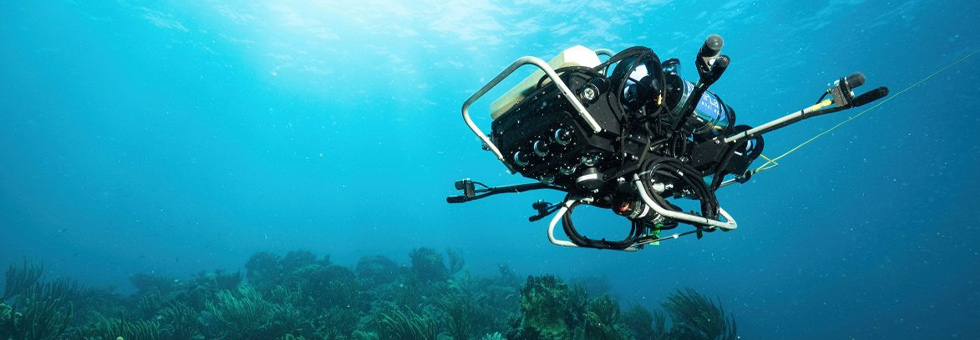
CUREE (Robot Submarino Curioso para la Exploración de Ecosistemas)
CUREE (Curious Underwater Robot for Ecosystem Exploration)
Photo by Austin Greene, © Woods Hole Oceanographic Institution
Introduction
An innovative underwater robot developed by scientists from the Woods Hole Oceanographic Institution (WHOI) is revolutionizing the way researchers study and protect coral reefs. This new technology combines audio and visual data to identify areas of high biological activity, opening new possibilities for the conservation of these vital ecosystems.
The system, known as CUREE (Coral Underwater Robot for Ecosystem Exploration), represents a significant breakthrough in coral reef research by detecting biodiversity “hotspots” that previously went unnoticed by traditional monitoring methods.
A New Era in Reef Exploration
Coral reefs face unprecedented threats due to climate change, ocean acidification, and pollution. The ability to rapidly identify the healthiest and most biologically active areas is crucial for directing conservation efforts where they are needed most. The CUREE robot addresses this challenge through advanced acoustic sensors that capture the characteristic sounds of a healthy reef, from the snapping of pistol shrimp to fish calls.
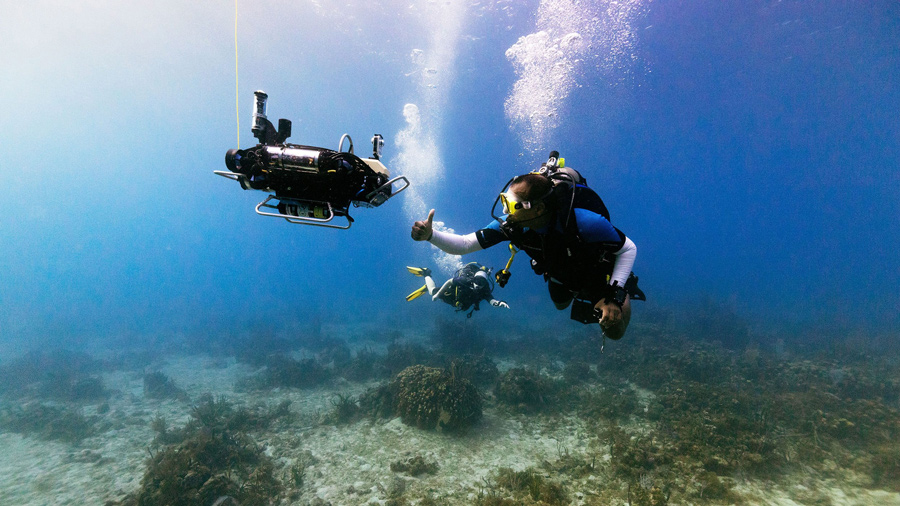
WHOI scientist and WARP Lab lead Yogesh Girdhar tests the CUREE (Curious Underwater Robot for Ecosystem Exploration)
Cutting-Edge Technology for Conservation
What distinguishes CUREE from other underwater vehicles is its multimodal approach. While autonomously navigating the reef, the robot simultaneously collects high-resolution images and acoustic recordings. An artificial intelligence algorithm processes this data in real-time to create detailed maps of biological activity.
Researchers discovered that reef sounds are reliable indicators of ecosystem health. A vibrant reef produces a constant symphony of activity, while degraded reefs tend to be noticeably quieter. This “acoustic fingerprint” allows scientists to quickly assess large expanses of reef without the need for exhaustive visual analysis.
Implications for Global Conservation
The findings have significant implications for conservation efforts worldwide. By efficiently identifying biodiversity hotspots, marine protected area managers can prioritize limited resources and focus restoration interventions where they will have the greatest impact.
The WHOI team plans to deploy CUREE at multiple sites in the Caribbean and Pacific over the coming years, with the goal of creating a global database of reef health that can guide marine conservation policies at the international level.
Source:
Press release link: Underwater robot discovers hidden coral reef “hotspots”
Author: WHOI Communications
Photo ©: Austin Greene / Woods Hole Oceanographic Institution
Copyright © 2025 Woods Hole Oceanographic Institution. Todos los derechos reservados.