



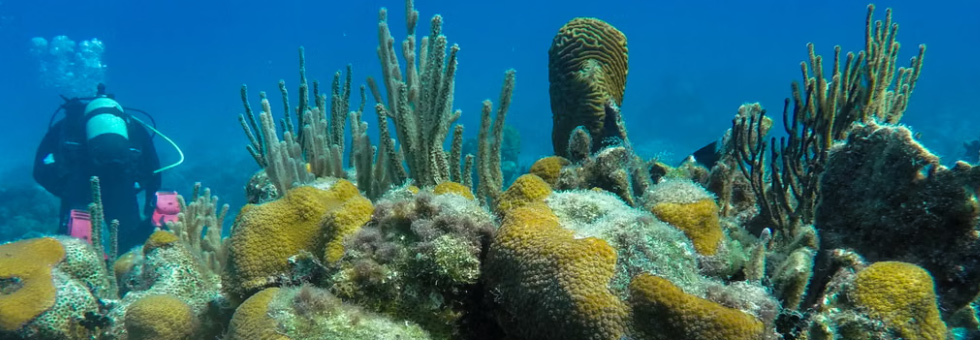
Photo: The Guardian
Introduction
In Ciénaga de Zapata National Park, in southeastern Cuba, volunteer divers gather every morning to collect plastics and cans from the sea. Amid an energy crisis that has paralyzed the country's economy, these conservationists use an electric trailer to get around and in just a few hours manage to fill five bags of waste.
As U.S. sanctions and economic scarcity impact the country, scientists and community conservationists work with increasingly limited resources to protect an ecosystem vital to the Caribbean and the world.
A pristine ecosystem under threat
Coral cover in the The Caribbean has decreased by 48% since 1980, according to a recent report from the Global Coral Reef Monitoring Network, which makes joint action between countries essential. However, the deterioration of relations between the United States and Cuba is hindering conservation efforts in the Gulf of Mexico.
Zapata Swamp is a notable example. The national park, recognized worldwide for marine conservation, is a biosphere reserve and Ramsar site for its biodiversity and geodiversity.
"Compared to other places, we don't have major pollution sources," explains Marileidy Albertus, specialist in exotic and wild species at the National Aquarium of Havana. "We don't have large industries, oil spills are almost nonexistent, maritime transport is limited, and for many years agroecological practices have been implemented."
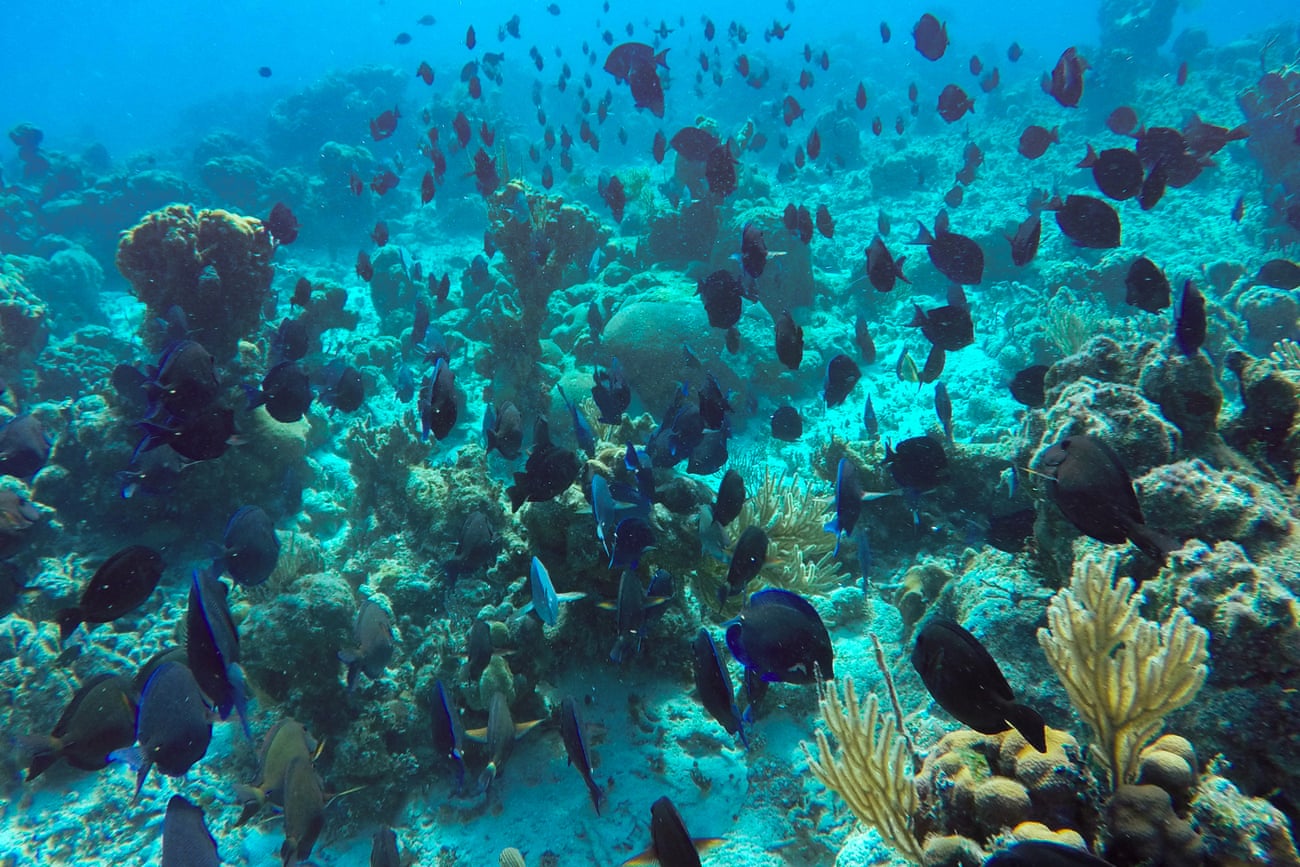
Blue tang fish on a reef in the Bay of Pigs, Cuba (The Guardian)
Innovation in the face of scarcity
Everything changed in 2023, when stony coral tissue loss disease (SCTLD) and an intense bleaching event damaged the reefs, leading the Cuban government to adopt a new protection policy.
At the National Aquarium of Havana, scientists face scarcity daily. They must manually provide oxygen to the tanks during power outages, struggle to acquire equipment manufactured in the United States, and have difficulty accessing American scientific publications. NGOs also face obstacles in funding projects and bringing Cuban scientists to international events.
Luis Mesa, a conservation diver in Ciénaga de Zapata, compares the restrictions to freediving: “With scuba equipment there are many possibilities: you can go deeper and stay underwater longer. But to protect the ecosystem, our resources are limited”.
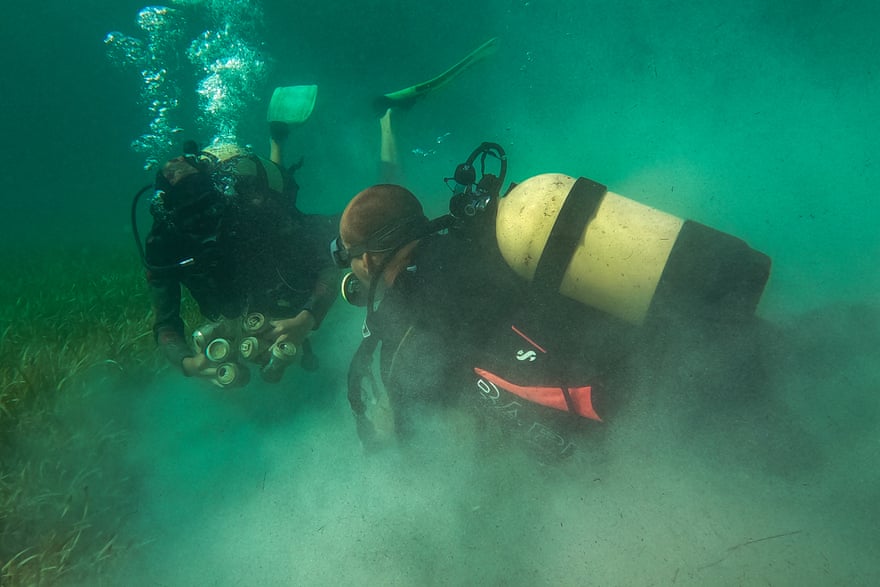
Alejandro Acebo and Jorge Sánchez, members of the volunteer diving group, during the cleanup at Playa Larga (The Guardian)
Alternative Restoration Techniques
With the help of volunteers like Mesa and Jorge Sánchez, marine biologists from the National Aquarium use freediving techniques to conduct experiments at 17 meters depth in a location accessible by swimming from their workplace, thus reducing fuel consumption.
They also develop their own substrates for coral restoration using recycled materials, such as broken clay and surplus cables from the national telecommunications company. Since 2019, they have been experimenting with coral cultivation through fragmentation and the ciclo de reproducción asistida (FIV). They are now innovating by combining both techniques, a costly and complex practice not used elsewhere.
"Most organizations depend on funding, and working on long-term projects like this is not easy," notes Albertus.
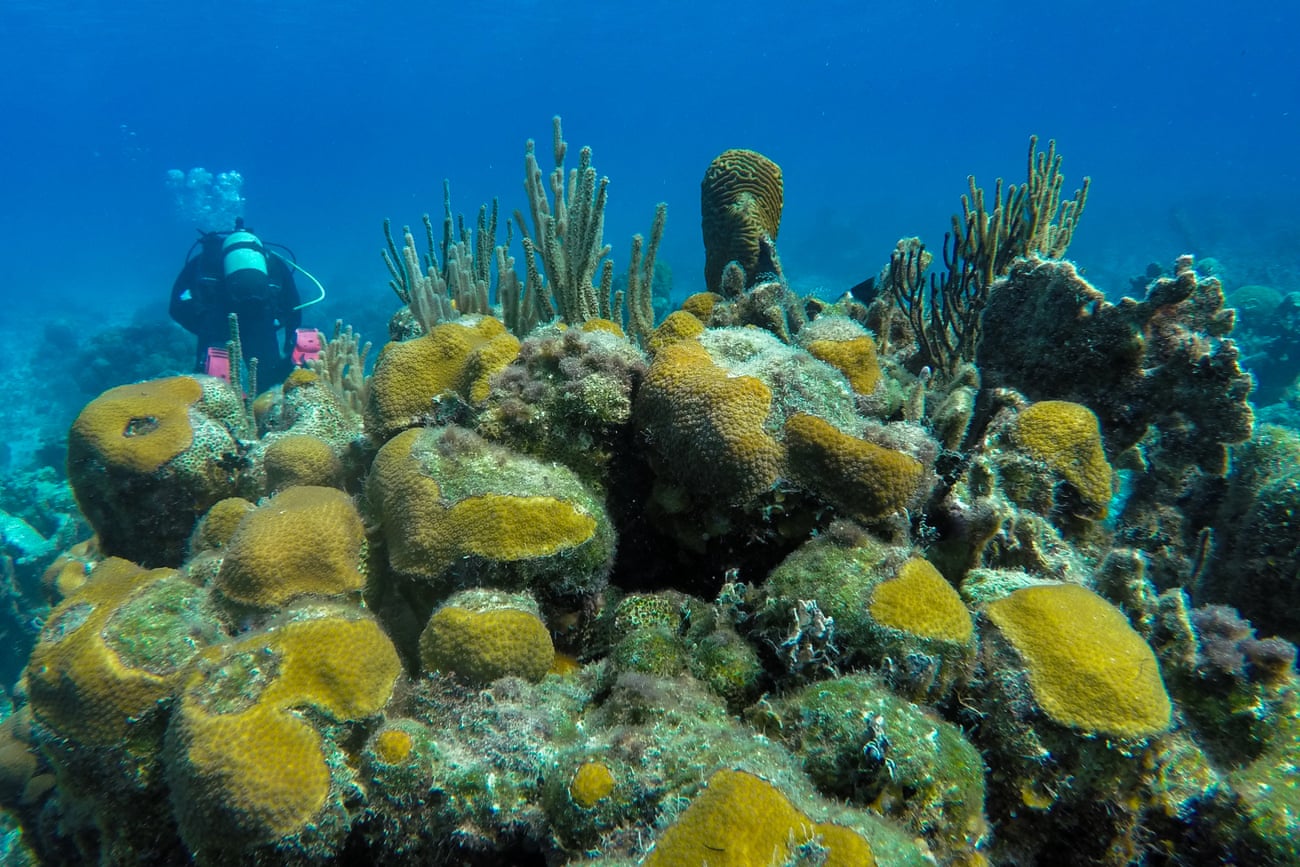
A colony of different types of corals, affected but showing resilience to the 2023 bleaching event (The Guardian)
Illegal Tourism and Fishing
While overtourism causes environmental problems in other places, in Cuba the collapse of the tourism industry due to the pandemic and the tightening of the blockade has also threatened conservation advances.
Many people who made a living from house rentals are returning to their original activities, such as illegal fishing. “If there are no tourists, they will go back to fishing because it’s what they know,” says Mesa.
Eduardo Abrego, a biologist with years of experience in Ciénaga de Zapata, adds: “The worst enemy of conservation is necessity. Humans always try to find a solution to their difficulties in nature”.
"The U.S. administration's decision to disinvest in the environment is extremely misguided and counterproductive," says Daniel Whittle, an expert in U.S. and Cuban environmental law at the Environmental Defense Fund. "Cuba contributes very little to climate pollution and has been very proactive since 1992 in having a climate strategy. They understand, as an island nation, that without these common resources everyone loses."
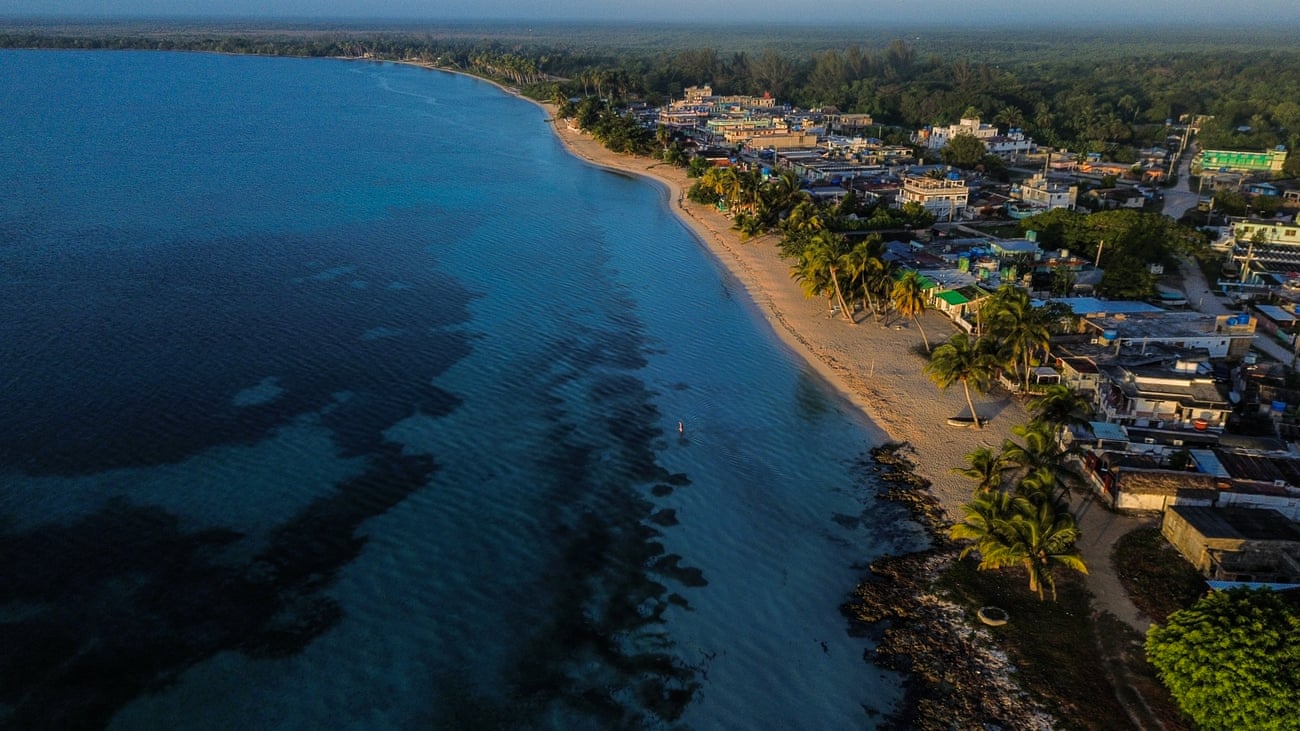
The deserted beach of Playa Larga after the latest Trump administration measures caused a drop in the number of visitors (The Guardian)
Source:
Press release link: Freedivers, leftover cables and bits of clay: Cuba gets inventive to save its pristine reefs amid US blockade
Author: The Guardian
Photo ©: The Guardian
Copyright © 2026. The Guardian. All rights reserved.